

Despite the pervasive global cultural and political influence of the United States, common misconceptions persist regarding its fundamental geopolitical structure. Public discourse frequently reveals a widespread misunderstanding of the nation’s basic geography, with regional designations often erroneously conflated with official statehood. An accurate understanding of the United States geopolitical composition requires clarifying the definitive number of states, exploring its historical expansion, and delineating the differences between states, federal districts, and territories.
The Prevalence of Geographical Misconceptions
Geographical literacy regarding the United States is often compromised by the complex nomenclature used to describe its various regions and territories. It is not uncommon for individuals to mistakenly identify macro-regions, such as New England or the Pacific Northwest, as individual political entities. Furthermore, colloquial terminology utilized in media broadcasts, such as “the lower 48” or “the continental United States,” can introduce unnecessary ambiguity into seemingly straightforward geographical inquiries. The clarification of these terms is essential for accurate geopolitical discourse.
Also Read : – Is Taylor Frankie Paul the Next Bachelorette? The Messy Rumors Explained
The Definitive Count: Resolving the 52-State Myth
When determining exactly how many states of united states of america exist today, the definitive and legally recognized total is fifty. The frequently cited figure of fifty-two states is a widespread misconception. This misconception is primarily attributed to two factors: the psychological conflation of the fifty states with the fifty-two cards in a standard deck of playing cards, and the erroneous inclusion of entities such as Washington, D.C., and Puerto Rico in the total state count. While these entities are under the jurisdiction of the United States, they do not possess statehood and therefore do not contribute to the official count represented by the fifty stars on the national flag.
Historical Expansion and the Admission of States
The contemporary map of the United States is the result of over two centuries of territorial expansion and political restructuring. The nation originated in 1776 as thirteen distinct colonies situated along the eastern seaboard, including regions that would become New York, Virginia, and Massachusetts. Following the American Revolutionary War and the subsequent establishment of a sovereign government, the nation embarked on a sustained period of westward expansion.
Through a combination of territorial purchases, treaties, and armed conflicts, the United States significantly increased its landmass. As newly acquired territories achieved sufficient population density and developed functional administrative infrastructures, they were systematically admitted to the Union as individual states, gradually expanding the national map to its current configuration.
Recent Admissions: The Non-Contiguous States
The current geopolitical structure of fifty states was finalized in the mid-twentieth century. The year 1959 marked the admission of the two most recent states, both of which are geographically separated from the contiguous landmass of the initial forty-eight states. Alaska was admitted to the Union in January 1959, followed by Hawaii in August 1959. Hawaii comprises an archipelago in the central Pacific Ocean, whereas Alaska is a vast territory situated at the northwestern extremity of the North American continent, separated from the contiguous United States by Canada.
Also Read : – The Cast of Shark Tale: The Celebrity Voices That Made It Feel Bigger Than a Kids’ Movie
Geographic and Demographic Disparities
The fifty states exhibit profound disparities in terms of land area and population. Alaska is the largest state by landmass, possessing an area more than twice the size of Texas, which is the second-largest state. Conversely, Rhode Island represents the smallest state by land area. Despite these vast geographic differences, the United States Constitution mandates equal representation in the Senate, granting both Rhode Island and Alaska the same number of senators (two) as highly populous and expansive states like Texas or California.
Alphabetical Enumeration of States
For those seeking a comprehensive reference regarding how many states of usa and their names are officially recognized, standard alphabetical categorization provides the most efficient organizational method. The following is the complete how many states of usa list, detailing all fifty semi-sovereign entities comprising the Union:
- Alabama
- Alaska
- Arizona
- Arkansas
- California
- Colorado
- Connecticut
- Delaware
- Florida
- Georgia
- Hawaii
- Idaho
- Illinois
- Indiana
- Iowa
- Kansas
- Kentucky
- Louisiana
- Maine
- Maryland
- Massachusetts
- Michigan
- Minnesota
- Mississippi
- Missouri
- Montana
- Nebraska
- Nevada
- New Hampshire
- New Jersey
- New Mexico
- New York
- North Carolina
- North Dakota
- Ohio
- Oklahoma
- Oregon
- Pennsylvania
- Rhode Island
- South Carolina
- South Dakota
- Tennessee
- Texas
- Utah
- Vermont
- Virginia
- Washington
- West Virginia
- Wisconsin
- Wyoming
Methodologies for Geographic Organization
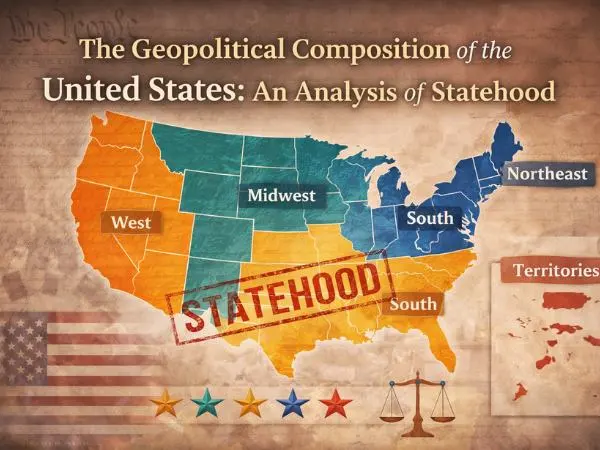
To facilitate academic study and administrative efficiency, the United States is frequently categorized into distinct geographic and cultural regions. The United States Census Bureau, for instance, utilizes a standardized regional classification system encompassing the West, the Midwest, the South, and the Northeast. This macroeconomic and cultural grouping transforms a formidable list of fifty individual states into manageable analytical units, allowing for a more nuanced understanding of regional demographics, economic output, and historical development.
The Status of the Federal District: Washington, D.C.
A prominent source of geopolitical confusion pertains to the status of Washington, D.C. (District of Columbia). It is essential to clarify that the capital of the United States is not a state. It operates as a unique federal district, established in accordance with the United States Constitution to serve as the exclusive seat of the federal government. The framers of the Constitution intentionally situated the capital outside the jurisdiction of any single state to prevent regional monopolies on federal power. Consequently, while residents of the District are subject to federal taxation, they lack voting representation in the United States Senate.
Also Read : – 25 Hot South Korean On Instagram
The Geopolitical Status of Puerto Rico
Similarly, the Commonwealth of Puerto Rico is frequently misidentified as a state. Situated in the Caribbean Sea, Puerto Rico is classified as an unincorporated territory of the United States. Individuals born in Puerto Rico are granted United States citizenship by birth and are integrated into the United States economic and postal systems. However, they are not entitled to voting representation in the United States Congress and do not participate in the general presidential election. The political status of Puerto Rico remains a subject of ongoing legislative debate, with periodic referendums conducted to assess public sentiment regarding potential statehood, independence, or the maintenance of its current territorial status.
Frequently Asked Questions (FAQ)
To address prevalent inquiries regarding United States geography, the following section provides concise, factual resolutions to common points of confusion:
What is the definitive number of states in the United States?
The United States comprises exactly fifty states. The figure of fifty-two is a common misconception often resulting from conflating the states with the 52-card deck or erroneously counting federal districts and territories.
Is it possible for the United States to admit additional states?
Yes. The United States Constitution outlines a legal mechanism for the admission of new states. Territories such as Puerto Rico or the federal district of Washington, D.C., could theoretically achieve statehood, contingent upon the approval of the United States Congress.
Which state was the first to ratify the Constitution?
Delaware holds the historical distinction of being the first state to ratify the United States Constitution on December 7, 1787.
Which state possesses the largest land area?
Alaska is the largest state by a significant margin, encompassing a vast expanse of the northwestern North American continent.
Which state encompasses the smallest land area?
Rhode Island is the smallest state geographically, situated in the northeastern region of the country.
Which state supports the largest population?
California is the most populous state, accommodating nearly forty million residents according to recent census data.
Which state maintains the smallest population?
Wyoming possesses the lowest total population among the fifty states, characterized by extensive geographical areas and low population density.
Conclusion
A thorough understanding of the geopolitical structure of the United States requires the strict differentiation between sovereign states, federal districts, and unincorporated territories. While the historical evolution of the nation’s borders introduces a degree of complexity, the contemporary political reality is defined by exactly fifty states. By relying on established cartographic data and constitutional definitions, individuals can circumvent common geographical misconceptions and achieve a precise understanding of the American geopolitical landscape.