

The name Ada King, Countess of Lovelace often appears wrapped in mystery, mathematics, poetry, and contradiction. Some people know her as a mathematician far ahead of her time. Others know her as the daughter of a famous poet. Many hear her name linked to the phrase “first computer programmer” and pause, unsure how someone born in the early 1800s could possibly earn that title. The truth sits in the space between logic and imagination, and that space defined Ada’s life more than anything else.
Born into privilege yet burdened by expectation, Ada lived a short life that still echoes through modern science and technology. Her ideas were not loud. They were precise, layered, and patient. She didn’t build machines with her hands. She built possibilities with her mind.
Augusta Ada King, Countess of Lovelace: Her Full Name and Identity
Ada Lovelace was born as Augusta Ada Byron on December 10, 1815, in London. Later in life, after marriage, she became known as Augusta Ada King, Countess of Lovelace, also written in historical records as Augusta Ada King-Noel, Countess of Lovelace. Each variation of her name reflects a different chapter of her life, shaped by family, marriage, and societal position.
Her identity was never simple. She was aristocracy and intellectual. A mother and a theorist. A countess and a mathematician. That combination was rare in Victorian England, especially for a woman.
Ada Byron King and Her Famous Father
Ada’s father was Lord Byron, one of the most celebrated poets of his era. His fame brought attention, but also instability. He separated from Ada’s mother shortly after her birth and left England when Ada was still an infant. Ada never truly knew him.
Her mother, Anne Isabella Milbanke, feared that Ada might inherit what she viewed as Byron’s emotional volatility. In response, she pushed Ada toward mathematics, logic, and science from an early age, believing structured thinking would protect her from what she called “poetic madness.”
That decision shaped history.
also read : – Elon Musk Wife: Why the Question Keeps Coming Back
A Childhood Built on Numbers, Not Nursery Rhymes
Ada’s upbringing was unusual for a girl of her class. Instead of focusing on embroidery and social etiquette, she studied algebra, geometry, astronomy, and logic. Tutors were carefully selected. Her schedule was strict. Her education was intentional.
This early exposure created a mind that moved easily between imagination and structure. Ada didn’t reject creativity. She redirected it.
Even as a child, she sketched designs for flying machines. She called this blend of creativity and calculation “poetical science,” a phrase that later became central to her legacy.
Augusta Ada King Countess of Lovelace as a Mathematician
Ada’s mathematical education intensified during her teenage years. She studied under prominent thinkers, including Augustus De Morgan, one of the leading logicians of the time. De Morgan recognized her potential early, noting both her talent and her unusual determination.
Despite societal limits placed on women, Ada absorbed advanced mathematical concepts with ease. Her curiosity wasn’t passive. She questioned assumptions, explored implications, and looked beyond formulas.
She didn’t want to solve equations for their own sake. She wanted to know what they could become.
Meeting Charles Babbage and the Analytical Engine
Ada’s most important intellectual partnership began when she met Charles Babbage. Babbage was developing what he called the Analytical Engine, a mechanical machine designed to perform calculations automatically.
Most people saw Babbage’s engine as an improved calculator. Ada saw something else entirely.
She recognized that the machine could manipulate symbols, not just numbers. In her mind, this meant it could process music, text, and abstract logic, given the right instructions. This insight placed her decades ahead of her contemporaries.
Ada Byron King and the First Computer Algorithm
The reason Ada Byron King, the Countess of Lovelace, is credited with writing the first computer program lies in her notes on the Analytical Engine. In 1843, she translated an Italian paper on the engine and added extensive annotations of her own.
One of these notes included a step-by-step method for calculating Bernoulli numbers using the machine. This method is widely recognized as the first published algorithm intended for a machine.
Ada didn’t just describe what the engine was. She described what it could do.
also read : – Joe Rogan Net Worth: Spotify Deal Impact, Wife, House, 2025 Estimates, and What Built His Fortune
Why Ada Lovelace’s Notes Matter More Than the Machine
The Analytical Engine was never completed during Babbage’s lifetime. Some critics once argued that this diminished Ada’s contribution. History proved otherwise.
Ada’s notes outlived the machine because they addressed ideas, not hardware. She imagined software before hardware existed to support it.
That distinction matters. Modern computing rests on abstraction, instructions, and symbolic manipulation. Ada articulated these concepts when computation was still mechanical.
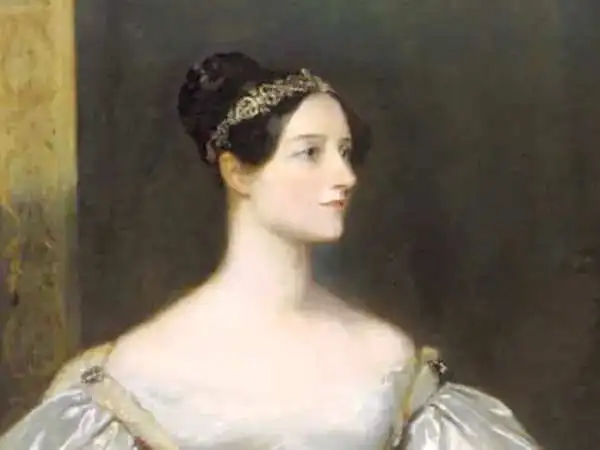
Portrait of Ada King, Countess of Lovelace
Many people search for a portrait of Ada King, Countess of Lovelace, hoping to understand her through her face. Most known portraits show a composed Victorian woman, eyes thoughtful, posture reserved.
These images reflect her era, not her intellect. Victorian portraiture emphasized restraint. Ada’s mind, however, was expansive.
Her real portrait lives in her writing, where curiosity meets precision.
Augusta Ada King Countess of Lovelace Dikenal Sebagai
In Indonesian and other non-English references, Augusta Ada King, Countess of Lovelace dikenal sebagai the first computer programmer. This global recognition shows how far her ideas traveled beyond her lifetime.
Her work is taught in computer science programs worldwide. Programming languages and awards bear her name. Each reference reinforces her place in history.
also read : – Javier Bardem Films, A Career Built on Intensity, and Why His Roles Continue to Matter
Ada Lovelace Family Members and Personal Life
Ada married William King-Noel in 1835, becoming Countess of Lovelace. Together, they had three children.
Her role as a mother existed alongside her intellectual pursuits, though balancing both was challenging. Health issues, societal pressure, and limited support often interrupted her work.
Despite these challenges, her intellectual focus never fully faded.
Health Struggles and Emotional Complexity
Ada suffered from chronic illness throughout her life. Treatments of the time often involved opiates, which complicated her physical and emotional state. These struggles influenced her productivity and relationships.
Yet even during periods of illness, her correspondence shows clarity of thought. She remained engaged with ideas, questions, and possibilities.
Her mind continued working, even when her body failed her.
Ada Lovelace’s Death and Short Life
Ada died on November 27, 1852, at the age of 36, the same age her father died. Her death was quiet. Her work, largely unknown at the time, faded from public view for decades.
Recognition came later. Much later.
That delay is common in revolutionary thinking. The future often arrives before society is ready to understand it.
Why Ada Lovelace Was Ahead of Her Time
Ada’s greatest insight was conceptual. She understood that machines could follow abstract rules. She understood that data could represent ideas, not just quantities.
This view underpins modern computing, artificial intelligence, and digital media. Ada didn’t predict computers as we know them today. She predicted the principle behind them.
That distinction explains her lasting relevance.
Ada Lovelace vs Modern Programmers
Comparing Ada to modern programmers misses the scale of her contribution. She worked without precedent, without tools, and without community support.
Her environment offered no roadmap. She created one.
Every modern programmer builds on layers of infrastructure. Ada worked at bedrock.
Why Ada Lovelace Still Matters Today
Ada’s story challenges assumptions about who shapes technological history. She wasn’t an engineer by trade. She wasn’t supported by institutions. She wasn’t celebrated in her lifetime.
Yet her ideas endured.
Her legacy reminds us that insight matters more than recognition, and imagination matters as much as logic.
also read : – Khushi Kapoor Bio, Age, Height, Weight And More
Ada Lovelace in Modern Culture
Today, Ada Lovelace appears in textbooks, documentaries, art, and popular media. Ada Lovelace Day celebrates women in science, technology, engineering, and mathematics.
Each mention pushes her story forward, correcting historical omission.
She is no longer a footnote. She is a foundation.
FAQs
Who was Augusta Ada King, Countess of Lovelace
A mathematician and visionary credited with writing the first computer algorithm.
Why is Ada Lovelace called the first programmer
She published the first algorithm designed for a machine to execute.
Was Ada Lovelace really a mathematician
Yes, she studied advanced mathematics and logic under leading scholars.
Who were Ada Lovelace’s family members
She was the daughter of Lord Byron and Anne Isabella Milbanke and had three children.
What is Ada Lovelace known for today
Her foundational ideas in computing and symbolic processing.
Final Words
Ada King, Countess of Lovelace, lived in a world that could not yet receive her ideas. She wrote for machines that didn’t exist and imagined systems no one else could see. Her legacy isn’t defined by what she built, but by what she understood. In a time ruled by limits, Ada thought in possibilities. And that is why her name still matters.